
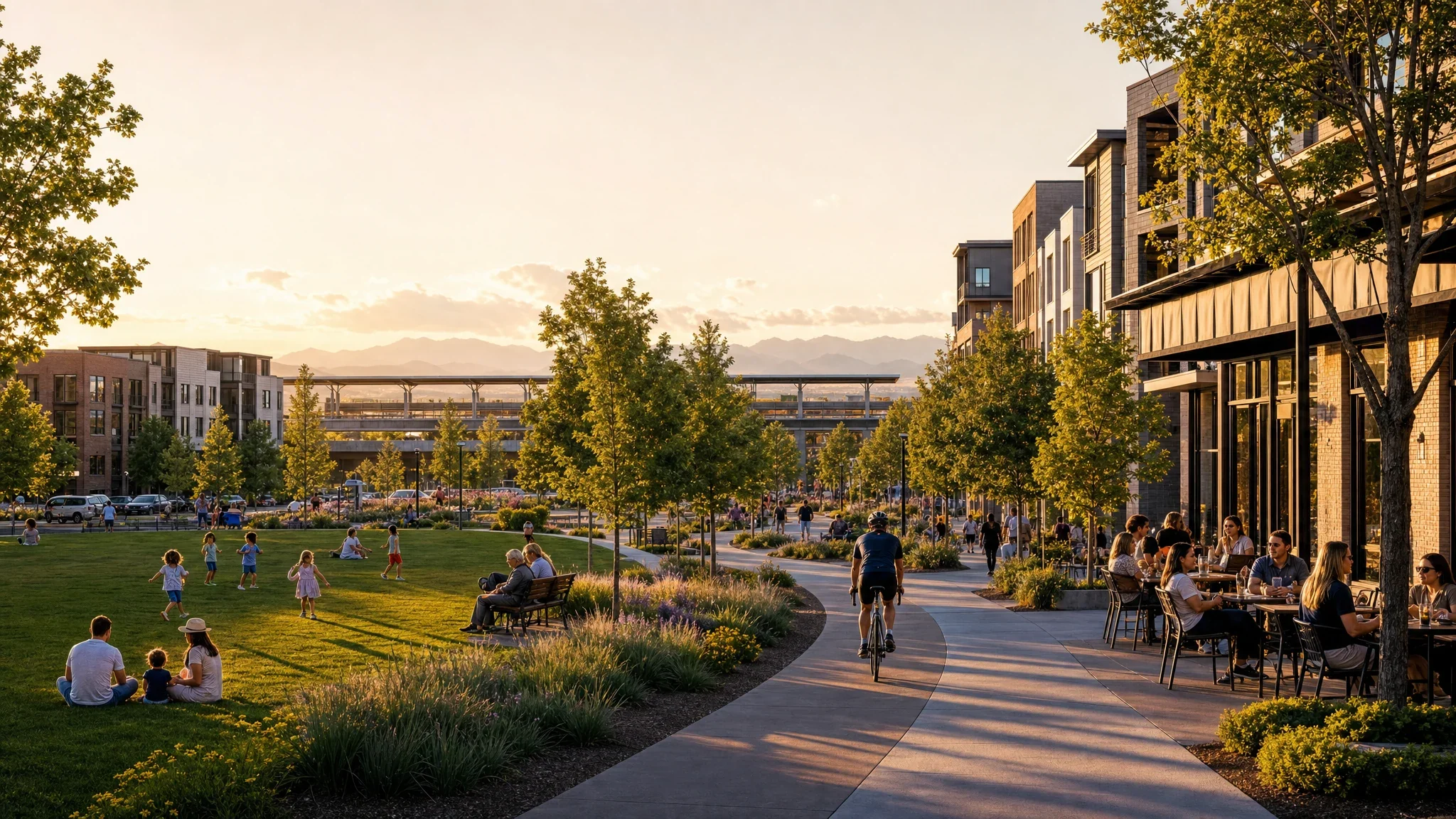
Central Park Apartments — Denver's Modern Master-Planned Neighborhood
Central Park is one of Denver's largest master-planned neighborhoods, and the thing that stands out most when you spend time here is how organized it feels. Wide boulevards, connected trail segments, a real town center, and a long list of parks give the area a very different rhythm from Denver's older urban neighborhoods. If you want a neighborhood with newer construction, bigger blocks, and easy access to both open space and transit, Central Park deserves a close look.
I'm Holly, and I help renters compare Central Park with nearby Denver options like Lowry and Aurora. My apartment locating service is complimentary for renters. Share your details on my Apartment Wishlist and I'll match you with listings that fit your budget and commute.
What Central Park Is Known For
Central Park is known for a few objective strengths that renters can actually measure:
50+ parks and pocket parks connected through a neighborhood trail network
Town Center access with groceries, restaurants, services, and everyday errands in one place
Sand Creek Regional Greenway access for longer bike and walking routes
A-Line rail connectivity that links the neighborhood to Union Station and Denver International Airport
The neighborhood is especially useful for renters who want a modern feel without living in a dense downtown block. You get more breathing room, more parking options, and a lot of buildings that were designed with current renter expectations in mind.
Central Park Apartment Pricing for 2026
Here's the pricing picture I'm seeing most often in 2026:
1-Bedroom: $1,700–$2,250, with many modern layouts falling around 750–950 square feet
2-Bedroom: $2,600–$3,300, with many floor plans in the 1,000–1,300 square foot range
3-Bedroom: $3,300–$4,200, often in townhome-style layouts or larger corner units
Holly's pricing tip: Central Park often gives you more interior space per dollar than central Denver neighborhoods. If you're comparing similar finish levels, it's worth checking how much square footage you're getting for the monthly rent.
Getting Around from Central Park
Central Park is one of the east-side neighborhoods where transit and driving both matter. The A-Line makes the biggest difference for renters who want a reliable rail connection. From the neighborhood, you can reach Union Station without dealing with I-70 traffic, and you can also connect to DIA without parking at the airport.
By car, Central Park has strong access to I-70 and I-270. Downtown Denver is typically about 20–25 minutes away depending on traffic, and the airport commute is one of the clearer advantages of living here if you travel often.
If your daily routine includes commuting to downtown, the Central Park parkways and arterials make the drive straightforward. If your routine is more transit-based, the rail line and bus connections give you a practical alternative to relying on a car every day.
Who Central Park Tends to Work Well For
Central Park may fit your priorities if:
You want a newer neighborhood with wide streets and a planned layout
You like having parks, trails, and open space close to home
You want stronger access to DIA and Union Station than most east Denver neighborhoods provide
You prefer larger floor plans and more predictable building design
You might prefer a different area if:
You want a dense, older urban grid — Capitol Hill and Uptown feel much more compact
You want the shortest possible drive to the DTC — Greenwood Village will usually be a better match
You want a historic small-town downtown — Arvada has that vibe
Building Types and Layouts You'll See
Modern mid-rise communities with in-unit laundry, garages, package rooms, and shared work areas
Garden-style apartments with surface parking and larger footprints
Townhome-style rentals that offer multi-level living and extra storage
One of the useful things about Central Park is that a lot of buildings were planned with current renter expectations in mind. That usually means better storage, more usable square footage, and more consistent amenity packages than you'll find in older stock.
Holly's Central Park Tips
Compare exact locations carefully. The closer you are to Town Center, the easier it is to walk to groceries and restaurants.
Check how close the building is to the A-Line. A short walk to rail can change your whole commute pattern.
Ask about parking and storage. Some communities include more practical extras than others, and those details matter in a planned neighborhood.
Look at your square footage, not just the model photos. Central Park units often feel noticeably roomier than older central Denver apartments.
Central Park Compared with Nearby Neighborhoods
Park access: Central Park: 50+ parks and trail connections · Lowry: multiple neighborhood parks and bike links · Aurora: major access to Cherry Creek State Park
Transit: Central Park: A-Line rail access · Lowry: bus and bike network · Aurora: R Line, A Line, and highway corridors
Typical 1BR rent: Central Park: $1,700–$2,250 · Lowry: $1,900–$2,500 · Aurora: $1,700–$2,100
Typical 2BR rent: Central Park: $2,600–$3,300 · Lowry: $2,600–$3,100 · Aurora: $2,600–$3,200
Ready to Find Your Central Park Apartment?
Here's how we can make this easy:
Share your details on my Apartment Wishlist — tell me your budget, move-in date, and must-haves
I do the research — I'll curate Central Park options that match your commute and square-footage goals
We tour together — virtual or in-person, depending on what works for you
Move in and settle comfortably — I'm here until you're in place
My service is complimentary for renters. The apartment communities compensate me, so there's no cost to you.