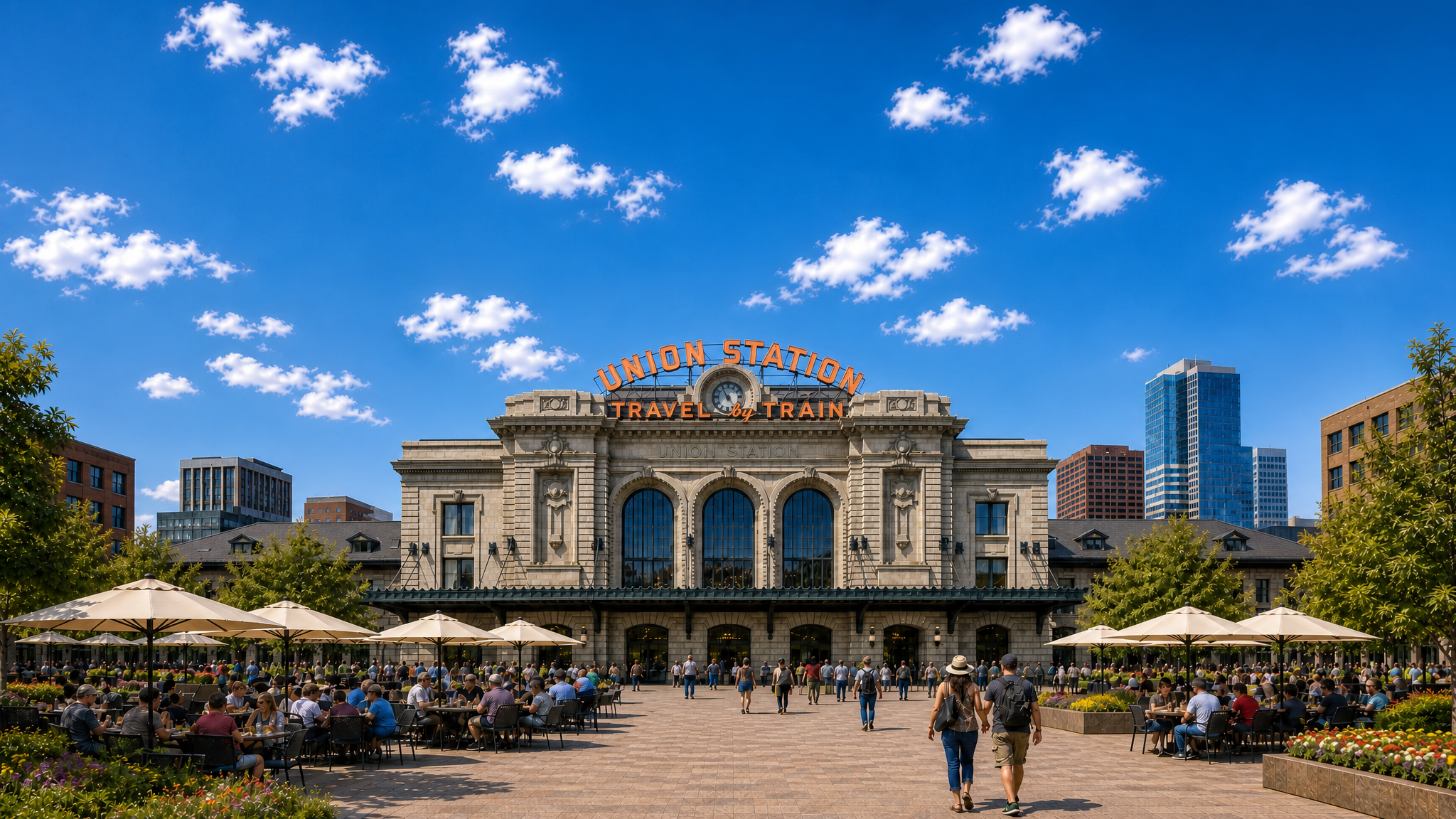
Union Station - Denver Apartments

Union Station & LoDo Apartments — Denver's Urban Core

Union Station and LoDo (Lower Downtown) is Denver's urban core — the neighborhood where you can genuinely live a car-free lifestyle, walk to work at a downtown office, and have world-class dining and entertainment at your doorstep. It's Denver's most expensive neighborhood, but for the right person, the math actually works out in your favor.

I'm Holly, a Denver apartment locator, and I help renters navigate neighborhoods like Union Station where the options are plentiful but the differences between buildings matter enormously. My service is complimentarystart your Apartment Wishlist and I'll match you with the right building.

The Car-Free Math That Makes Union Station Worth It

Here's the conversation I have with almost every client who initially rules out Union Station because of the rent: do the full math.

If you work downtown and live in Union Station, you can realistically ditch your car. That saves you:

  • Parking: $150–$250/month (garage parking at most Denver buildings)

  • Car payment: $400–$600/month (average)

  • Insurance: $100–$200/month

  • Gas: $80–$150/month

That's $730–$1,200/month in car-related expenses. When you subtract that from Union Station's higher rent, the neighborhood suddenly becomes very competitive with places like Denver Tech Center or Central Park where you absolutely need a car.

My client David, a financial analyst, did exactly this calculation. He sold his car, moved into a 1BR in LoDo for $2,400, and told me he's actually saving money compared to his old setup in the suburbs. Plus, his commute went from 45 minutes to 7 minutes on foot.

Union Station/LoDo Apartment Pricing (2026)

Studio:

  • LoDo Core: $1,700–$2,200

  • North of Union Station: $1,500–$1,900

1-Bedroom:

  • LoDo Core: $2,100–$2,900

  • North of Union Station: $1,900–$2,500

2-Bedroom:

  • LoDo Core: $2,800–$4,200

  • North of Union Station: $2,500–$3,500

Pro tip: Buildings slightly north of Union Station toward the Platte River are often $100–$300/month less than buildings right on the 16th Street Mall — with the same walkability and better views. I always show clients options in both areas.

What It's Like to Live at Denver's Front Door

Union Station itself is a beautifully restored 1914 Beaux-Arts train station that now serves as Denver's transit hub, social gathering place, and de facto living room. The Great Hall has cocktail bars, restaurants, a bookstore, and complimentary WiFi — many of my clients use it as a remote work spot.

LoDo surrounds Union Station with Denver's highest concentration of restaurants, bars, and entertainment. Coors Field (Colorado Rockies) is a few blocks away. The 16th Street Mall — a mile-long pedestrian promenade — runs through the heart of the neighborhood. And the Platte River Trail provides direct bike access to neighborhoods like RiNo, LoHi, and Cherry Creek.

Transit Connections: Denver's Best

Union Station is the hub of Denver's RTD transit system. From here, you can catch:

  • A-Line to Denver International Airport — 37 minutes, no traffic, no parking fees

  • Light rail lines to the Tech Center, Littleton, Aurora, and beyond

  • Bus routes to virtually every Denver neighborhood

  • Complimentary MallRide shuttle along the 16th Street Mall

If you travel frequently for work, living near Union Station means you can get to DIA without ever calling an Uber. That alone saves hundreds of dollars a year.

Who Thrives in Union Station/LoDo

  • Downtown office workers who want a walking commute

  • Frequent travelers who value airport access

  • Sports fans (Coors Field, Ball Arena, and Empower Field are all nearby)

  • People who want maximum urban energy and don't mind paying for it

Not your speed? If you want urban living at a lower price point, Capitol Hill offers similar walkability for $200–$400/month less. If you want the food scene without the downtown intensity, RiNo or LoHi might be better fits.

Holly's Union Station Tips

  1. North vs. South of the tracks matters. South of Union Station (toward the 16th Street Mall) is more commercial and tourist-heavy. North of the station (toward the Platte River) is quieter, more residential, and often cheaper.

  2. Ask about noise. Some LoDo buildings are near bars and nightlife. If you're a light sleeper, I'll steer you toward quieter blocks.

  3. Weekend energy is different. LoDo gets busy on weekend nights (especially during baseball season). If you want urban living without the weekend party scene, consider the north side or look at Ballpark District.

Ready for Downtown Denver Living?

Let me help you find the right building in Union Station/LoDo — my service is complimentary for renters.

Start Your Apartment Wishlist →